In the novel Going After Cacciato, Tim O'Brien first starts by telling you a brief update on what is going on at the platoon and then introduces the main idea of the story line. The first chapter is clearly setting up the rest of the novel to elaborate on. In this scene Tim O'Brien tells about Cacciato and his encounter with Paul Berlin and then fast forwards to Cacciato running away and Berlin trying to remember exactly where Cacciato said he always wanted to go.
Lt. Corson tells the platoon about the mission; going after Cacciato and they disagree. All the soldiers think that Cacciato is dumb because he is always grinning, whistling, and chewing gum therefore; they do not want to go look for him. However; Lt. Corson decides that the soliders will pursue the mission and bring Cacciato back.
Berlin then remembers how Cacciato would spend hours day looking at maps, and asking questions about mountains, planning out this trip. Berlin can not remember all the places that Cacciato says that he would go through but he could remember a few. The squad then sets out to catch Cacciato.
Cacciato is then sighted many times throughout the first chapter but he is never caught. Cacciato even sets out smoke bombs; which makes the troops very upset, to see if anyone was behind him. The end of the chapter leaves you wanting to know more. It tells you at Berlin is instructed to fire a green flare and then the squad moves in to capture Cacciato. The structure of this novel sets up the a major theme and then makes it where you have to read the rest to know what happends.

Sunday, January 9, 2011

Saturday, January 8, 2011
"I guess it's better this way. There is worse things that could happen. There is plenty of worse things"

"Ultimately it's about the forces of fear and heroism of our hearts"

Is Berlin saying that you have to forget the fear and be a hero? That you can't think about all the bad that is going on but where you can make it positive? The bravery and courage of this soliders is heart touching. I truley believe that Berlin is an amazing character. Tim O'Brien did a great job on Paul Berlin, I just wonder if this is how Tim O'Brien was when he was in Vietnam.
Publication
Going after Cacciato is a war novel writting by Tim O'Brien. The novel is set during the Vietnam War and is told by Paul Berlin. The story is telling of the events of going after Cacciato; a memebr of his squad that decided to walk from Vietnam to France.
Author: Tim O'Brien
Publisher: Double Day (US) Johnathan Cape (UK)
Publication Date: January 1978
Award(s): Winner of The National Book Award for fiction in 1979
Tim O'Brien
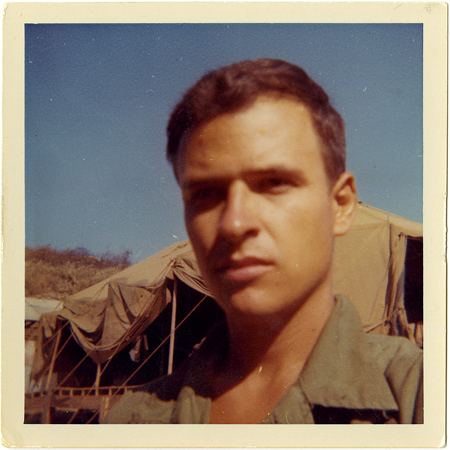
Tim O'Brien is from small town Minnesota. He was born in Austin on October 1, 1946, a birth date he shares with several of his characters, and grew up in Worthington, "Turkey Capital of the World."
O'Brien was against the war, but reported for service and was sent to Vietnam with what has been called the "unlucky" Americal division due to its involvement in the My Lai massacre in 1968, an event which figures prominently in In the Lake of the Woods.. He was assigned to 3rd Platoon, A Co., 5th Batt. 46th Inf., as an infantry foot soldier. O'Brien's tour of duty was 1969-70. After Vietnam he became a graduate student at Harvard. No doubt he was one of very few Vietnam veterans there at that time, much less Combat Infantry Badge holders. Having the opportunity to do an internship at the Washington Post, he eventually left Harvard to become a newspaper reporter. O'Brien's career as a reporter gave way to his fiction writing after publication of his memoir If I Die in a Combat Zone, Box Me Up and Send Me Home. Tim O'Brien is now a visiting teacher at Southwest Texas State where he teaches creative writing.
O'Brien was against the war, but reported for service and was sent to Vietnam with what has been called the "unlucky" Americal division due to its involvement in the My Lai massacre in 1968, an event which figures prominently in In the Lake of the Woods.. He was assigned to 3rd Platoon, A Co., 5th Batt. 46th Inf., as an infantry foot soldier. O'Brien's tour of duty was 1969-70. After Vietnam he became a graduate student at Harvard. No doubt he was one of very few Vietnam veterans there at that time, much less Combat Infantry Badge holders. Having the opportunity to do an internship at the Washington Post, he eventually left Harvard to become a newspaper reporter. O'Brien's career as a reporter gave way to his fiction writing after publication of his memoir If I Die in a Combat Zone, Box Me Up and Send Me Home. Tim O'Brien is now a visiting teacher at Southwest Texas State where he teaches creative writing.
Alan Jackson VS Paul Berlin
Just like Alan Jackson's song it only takes one day, one thing to go competely wrong for someone to reflect upon what they really have. Paul Berlin was in Vietnam one day when someone in his platoon dies of fright. Some where deep down you have to remember who you are and what you are there for and I think both the book and the song both convey that message.
"Somewhere inside each man is a biological center for the exercise of courage"

Berlin is such a man of hope and courage. I have fallen in love with his character. He is always just trying to look for the good in everyone and everything. I wish everyone that served our country would have the same attitude as Berlin.
"You'll see some terrible stuff, I guess. That's how it goes. But try to look for the good things, too. They'll be there if you look. So watch for them."

I love looking for the positive in everything. People who only focus on the negative are going to get negative. However, if you search for the good in every situation you'll find it. To me this quote isn't about the situation but how one chooses to look at the situation. A person shouldn't let the situation control them but them control the situation. The soliders can't change that they are in the war, that choice was made long before then; however they could look at their situation in the best way possible.
"Paul Berlin sat alone playing solitare in the style of Las Vegas. ...Pretending was his best trick to forget the war"

Everyone person has an escape from their troublesl; a place where everything is alright. It seems to me that Paul Berlin is finding his happy place in a time of war. Soldiers might have gone through every intense training and be able to do things that civilians might not; however they are human too. This just makes me relate to the character. I don't have any idea what war is like but I know what it is like to find my comfort zone in a time that I am totally not comfortable.
Subscribe to:
Posts (Atom)